

The Complete Multichannel Ecommerce Guide for UK Sellers in 2026
Everything UK ecommerce sellers need to know about selling across multiple channels — from choosing the right marketplaces to managing inventory, orders and fulfilment at scale.
What is multichannel ecommerce?
Multichannel ecommerce is the practice of selling your products across more than one platform simultaneously. Instead of depending on a single marketplace or storefront, you distribute your catalogue across multiple channels — Amazon, eBay, Shopify, TikTok Shop, and others — each serving a different segment of your potential customers.
The advantage is reach. The challenge is complexity.
When you sell on one channel, managing stock, orders, and listings is straightforward. Add a second channel and the complexity roughly doubles. Add a third and you introduce a category of problems — stock conflicts, order routing, listing inconsistencies — that require systematic solutions rather than manual workarounds.
This guide is a practical overview of how multichannel ecommerce works in the UK in 2026, what the real operational challenges are, and how growing sellers address them.
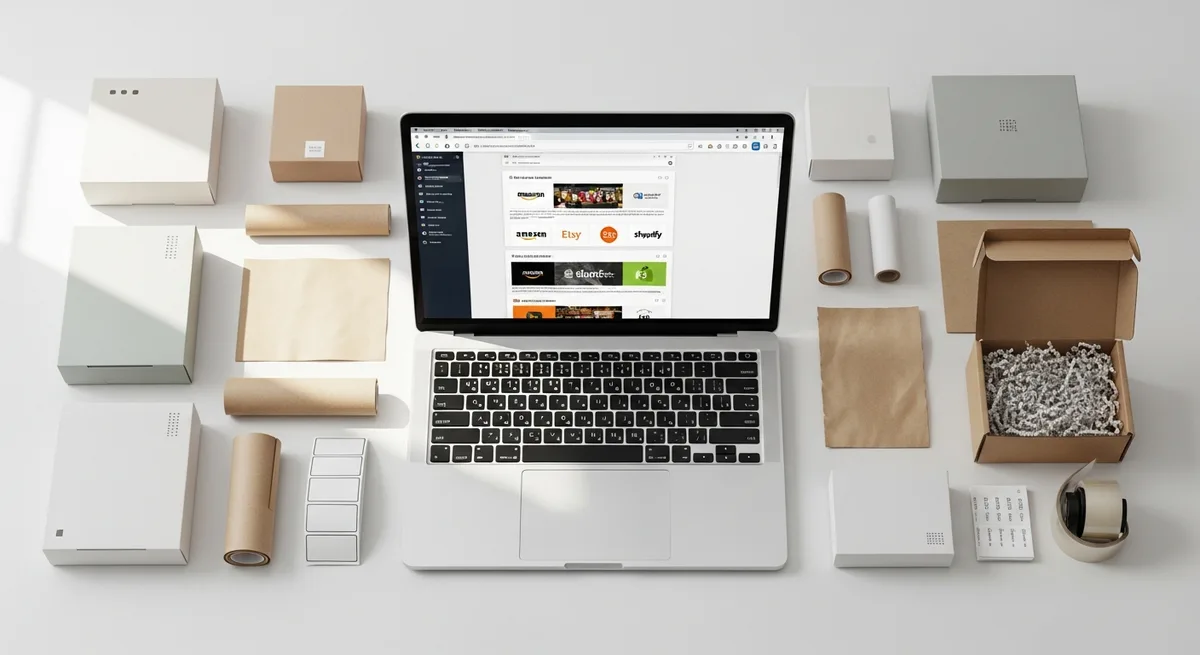 A typical multichannel seller manages Amazon, eBay, Shopify and more from a single workspace — the right tooling makes the difference.
The UK multichannel landscape
The UK is one of the most developed ecommerce markets in the world. UK consumers shop across a wider range of platforms than most European markets, and the channel mix is genuinely diverse.
Amazon UK remains the dominant marketplace by GMV. For most product categories, a strong Amazon presence is non-negotiable.
eBay UK has a loyal customer base, particularly for used goods, parts, and categories where price competition is high. It remains a significant volume driver for many sellers.
Shopify and WooCommerce give sellers a branded direct-to-consumer storefront. DTC margins are higher than marketplace margins, and the customer relationship is owned by the seller.
Emerging channels — TikTok Shop has grown rapidly since its UK launch. ManoMano is the dominant channel for DIY and home improvement. Etsy serves handmade and vintage categories. B&Q Marketplace, OnBuy, and Decathlon Marketplace provide access to specialist audiences.
A typical growing UK multichannel seller might be on Amazon, eBay, and one or two specialist marketplaces, with a Shopify or WooCommerce store as their DTC channel.
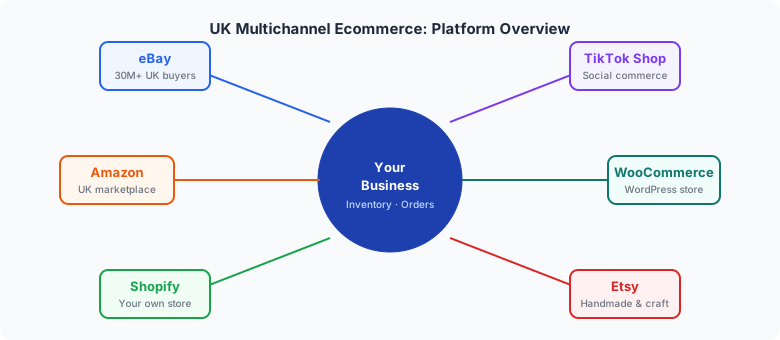 Every channel is a spoke connected to one central platform — listings, stock, and orders all managed from a single point.
The four core operational challenges
1. Listing management at scale
Creating and maintaining product listings across multiple platforms is the first operational challenge. Each platform has different category structures, different mandatory fields, different image requirements, and different best practices for title formatting.
Doing this manually for a catalogue of 100+ SKUs is possible. At 500+ SKUs it becomes a full-time job. At 1,000+ it is simply not sustainable without tooling.
The solution is a centralised product information management (PIM) system that lets you create your catalogue once and push it to multiple channels from a single data source. When you update a title or add an image, the change flows to every connected channel automatically.
2. Inventory sync
Shared inventory across multiple channels is the most acute operational risk in multichannel selling. When a product sells on one channel, the available quantity on every other channel must update immediately.
A 30-second lag is enough to create an overselling scenario. A 5-minute lag during a busy period can result in dozens of conflicts.
Real-time inventory sync — where stock levels are updated across all connected channels within seconds of a sale — is a non-negotiable requirement for any seller operating on more than two channels.
3. Order management
When orders are coming in from Amazon, eBay, Shopify, and two other channels simultaneously, working through five separate seller portals is not viable. Order volume increases but so does the complexity of routing — which orders need same-day despatch, which courier should handle which order, which warehouse location holds the right stock.
Unified order management consolidates all orders into a single view, applies routing rules consistently, and ensures the right despatch information flows back to the right channel.
4. Reporting and analytics
Understanding which channels are actually profitable — accounting for platform fees, return rates, advertising costs, and operational overhead — requires data that spans multiple platforms. Getting that data out of each platform separately and combining it manually is time-consuming and error-prone.
Cross-channel reporting gives sellers a unified view of performance: revenue, margin, and order volume by channel, by product, by time period.
How multichannel operations mature
Most sellers go through recognisable stages as their multichannel operation grows.
Stage 1: Manual everything — Listings copied manually between platforms, stock updated manually after each sale, orders worked through each seller panel separately. Works at low volume. Breaks as soon as order volume grows.
Stage 2: Partial automation — One or two tools introduced to address the most acute pain points (usually inventory sync first). Some manual processes remain.
Stage 3: Centralised operations — A single platform manages listings, inventory, and orders across all channels. The seller's team works from one system regardless of channel. This is where genuine operational leverage emerges.
The jump from Stage 1 to Stage 3 is where most of the complexity sits. The right tools make it achievable without rebuilding your entire operation from scratch.
Choosing the right channels
Not every channel is right for every product category. Before expanding to a new platform, evaluate:
Fee structure — Amazon, eBay, and specialist marketplaces all charge different commission rates and have different fee structures. Model the margin impact of each new channel before investing in setup.
Audience fit — ManoMano's customers are buying power tools and garden equipment. Etsy's customers are buying handmade and vintage goods. Selling the wrong product category on the right platform produces poor results.
Fulfilment expectations — Amazon customers expect next-day delivery. eBay customers are often more flexible. Understanding the fulfilment expectations of each channel's customer base shapes your warehouse and courier decisions.
Volume potential — Some channels drive significant volume for certain categories. Others drive minimal volume and cost setup time that exceeds the return.
What to look for in multichannel software
When evaluating multichannel ecommerce platforms, the core capabilities to look for are:
- Real-time inventory sync across all connected channels
- Centralised listing management with channel-specific overrides
- Unified order management with pick & pack tooling
- Automation rules for stock quantity caps, pricing adjustments, and order routing
- Cross-channel reporting with margin and performance data
- Native integrations with the channels and ERPs you already use
The platforms that excel at all of these — without requiring custom development or heavy professional services — are the ones that genuinely move the needle for growing sellers.
Adlixor is built for UK multichannel sellers at this stage of growth. See how it works →
Ready to simplify your multichannel operations?
Start your 14-day free trial with Adlixor Presence — no credit card required.