

Reducing pick and pack errors in high-volume fulfilment
As order volumes rise, small inconsistencies in picking and packing quickly turn into measurable costs across customer service, returns, and rework. High-volume fulfilment relies on repeatable processes, clear data, and fast decision-making at the packing bench. Reducing errors requires treating accuracy as a system outcome rather than an individual effort.
By Darren ArdenerUpdated
Co-founder of Just Applications Ltd, the team behind Adlixor
The Challenge
Manual pick lists, ad-hoc bin labelling, and packing by memory increase the chance of selecting the wrong variant, quantity, or item condition. When stock locations are not maintained and product data is inconsistent, operators spend time searching and make more substitutions under pressure. Errors are often discovered after despatch, leading to replacement shipments, reverse logistics, inventory adjustments, and weakened performance reporting.
The Solution
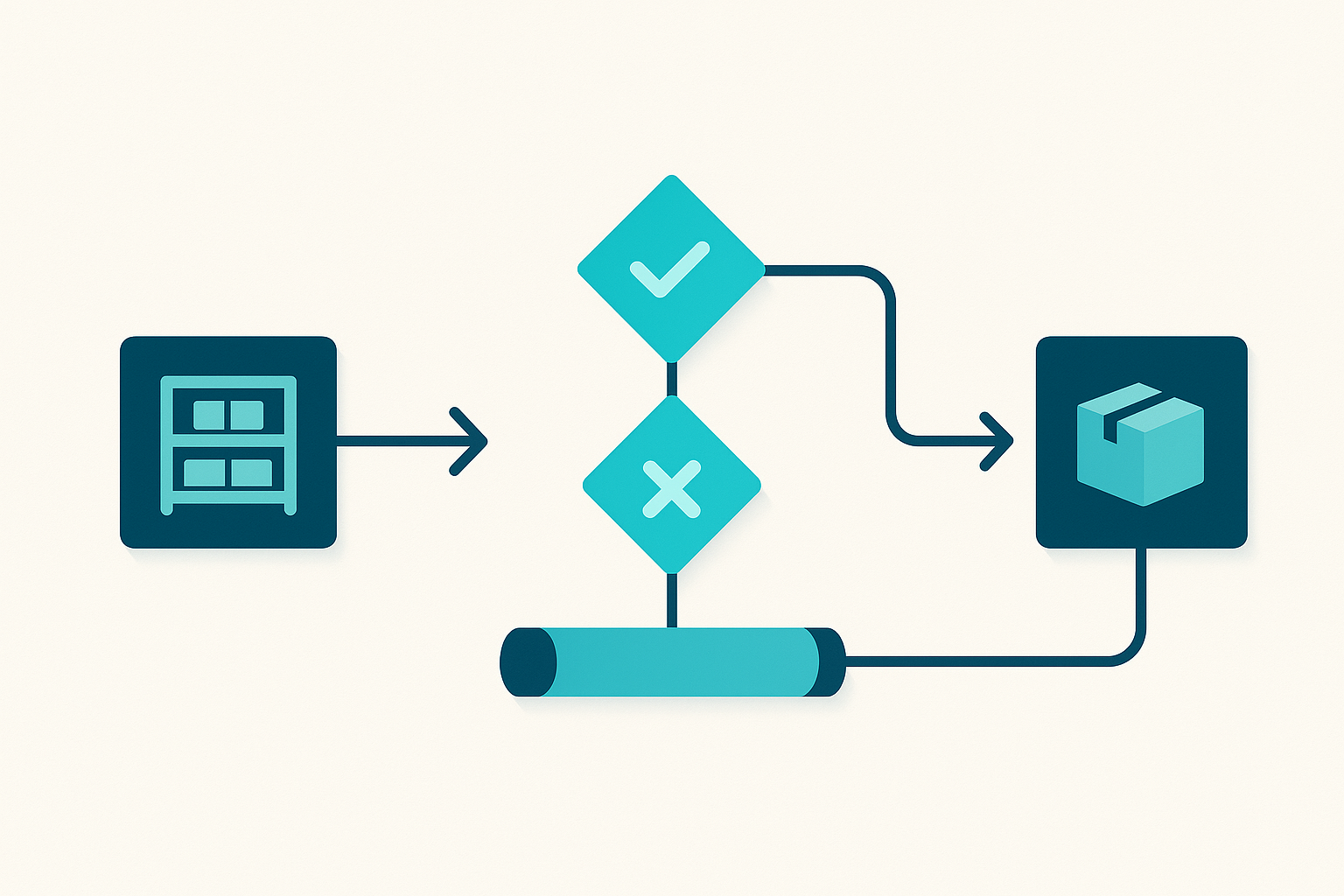
A systematic approach standardises locations, product identifiers, and pick paths, then validates picks and packs with scanning and rule-based checks. Automated allocation, real-time inventory updates, and exception handling reduce ambiguity and prevent known error patterns from reaching despatch. Continuous measurement of error reasons and process compliance allows targeted fixes to layout, data, and training.
Step-by-Step Guide
- 1
Define what counts as a pick error and a pack error, then set baseline rates using returns, customer contacts, and internal rework logs.
- 2
Standardise SKU structure, barcode formats, and variant attributes so each sellable unit has a single unambiguous identifier.
- 3
Implement location control with consistent bin labels, zoning, and putaway rules to reduce searching and mis-picks.
- 4
Introduce scan verification at pick and at pack, requiring item, location, and order confirmation before progressing.
- 5
Configure packing checks such as weight tolerance, item count validation, and mandatory review for substitutions or shortages.
- 6
Optimise pick routes using waves or batches aligned to warehouse layout and carrier cut-offs to reduce congestion and rushing.
- 7
Create an exception workflow for shorts, damages, and unscannable items, including approved resolution options and audit trails.
- 8
Train operators on standard work and rotate roles with competency checks to maintain consistency across shifts.
- 9
Review weekly error reasons and apply corrective actions to data quality, replenishment triggers, and physical layout.
Pro Tips
- ✓Separate visually similar items and variants into different bays to reduce confusion under speed pressure.
- ✓Use clear unit-of-measure rules so picks do not mix singles, multipacks, and cases.
- ✓Require a final pack scan of every line item rather than sampling when volumes spike.
- ✓Limit manual edits to orders after picking starts, and route changes through a controlled exception queue.
- ✓Treat unscannable barcodes as a data issue and fix the source rather than allowing repeated workarounds.
- ✓Set replenishment thresholds so pick faces do not run empty mid-wave, which often triggers hurried substitutions.
Frequently Asked Questions
- What are the most common causes of pick and pack errors at high volume?
- Frequent causes include confusingly similar products, inconsistent product data, poor location discipline, and time pressure created by cut-offs. Errors also rise when exceptions are handled informally and not recorded.
- Is scan verification enough to eliminate mistakes?
- Scanning reduces many wrong-item errors, but it will not fix issues like incorrect master data, mixed stock in a location, or wrong quantities caused by unit-of-measure confusion. It works best alongside controlled putaway and pack-level checks.
- How do we measure pick and pack accuracy reliably?
- Use a consistent definition and track errors from returns, customer reports, and internal rework, then reconcile against total lines despatched. Add reason codes to avoid treating all errors as the same problem.
- How should we handle shortages discovered during picking?
- Route shortages into a defined exception step that can trigger replenishment, substitution rules, split shipments, or customer contact. Avoid allowing pickers to substitute without recording the decision and its reason.
- What role does warehouse layout play in error reduction?
- Layout affects search time, congestion, and the likelihood of grabbing the wrong item from adjacent locations. Zoning, clear signage, and separating lookalike products reduce cognitive load and improve repeatability.
- Can packing checks slow down throughput too much?
- Poorly designed checks can add friction, but targeted controls such as scan-at-pack and weight tolerances usually prevent more time-consuming rework later. The aim is to stop errors before despatch, where the cost is highest.
Related Guides
Further reading from our blog
- BlogHow to Connect Royal Mail to Your Ecommerce Store and Automate FulfilmentA step-by-step guide to Royal Mail integration for UK ecommerce sellers — covering Click & Drop, OBA setup, label formats, tracking, and full automation.
- BlogHow to Bulk Print Shipping Labels from eBay: Stop Doing It One at a TimeBulk print shipping labels from eBay in seconds instead of minutes per order. A complete guide to eBay's built-in tools, CSV workflows, and full automation for high-volume sellers.
Ready to simplify your multichannel operations?
Start your 14-day free trial with Adlixor — no credit card required.